Drying and Curing Cannabis in a British Climate
Royal King Seeds
Cultivation team
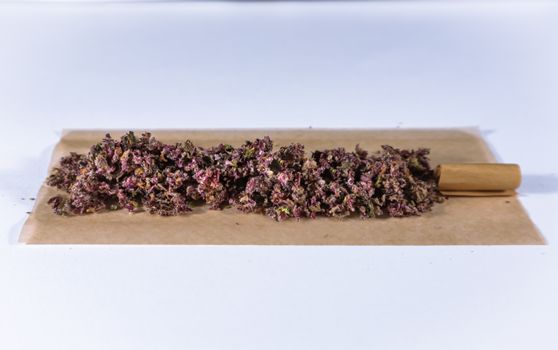
The harvest is not the finish line. For UK growers, it is where most of the season's work gets destroyed. Every September and October, perfectly grown buds are ruined not in the tent or under the sun , but in a damp spare bedroom where humidity runs unchecked, mould sets in quietly, and a month of careful growing collapses in four days.
The failure mode is almost always the same: growers pull plants, hang them, and assume the work is done. But Britain's autumn air , cool, saturated, and unpredictable , is uniquely hostile to freshly cut cannabis. Without deliberate control of temperature and relative humidity, you are not drying your buds. You are incubating mould.
The specific numbers that protect a UK harvest are 15 to 18°C, 55 to 62% relative humidity, and a minimum 10-day hang time before any trimming or jarring. Get those three right, and a wet British autumn becomes manageable. Get them wrong, and it does not matter which strain you grew.
This guide gives you the exact process , drying environment setup, the curing schedule, region-specific timing, and the seven most common mistakes UK growers make at this stage. Start here before you cut a single branch.
- ✓ UK outdoor growers harvesting in September and October
- ✓ Indoor growers in humid British homes without climate control
- ✓ First-time harvesters who have never dried or cured before
- ✓ Growers who have lost buds to mould post-harvest in previous seasons
- ✓ Anyone who wants to understand why cured buds smoke better
- ✗ Growers with a fully climate-controlled drying room already dialled in
- ✗ Commercial operations using freeze-drying or rotary equipment
- ✗ Growers in southern European or continental climates
Hang whole branches in a dark room at 15 to 18°C and 55 to 62% RH for 10 to 14 days. Then trim, jar loosely, and cure for 4 to 8 weeks, burping lids daily for the first two weeks. Britain's cool, damp autumn means the slow-dry approach is not optional , it is what separates mould-free, smooth-smoking buds from a ruined crop.
Most UK growers under-cure. The terpene conversion that creates real flavour happens almost entirely between weeks 3 and 6 in the jar.
Why Does British Autumn Make Drying Cannabis So Much Harder?
Britain's autumn climate is the drying room's worst enemy: cool temperatures slow evaporation while high ambient humidity keeps moisture trapped inside the bud. Per Met Office 1991 to 2020 climate normals, October mean relative humidity across England and Wales sits between 82 and 89%, well above the 55 to 62% target range for safe drying.
That gap matters enormously. When ambient RH exceeds 70%, surface moisture on freshly cut buds cannot evaporate fast enough to stay ahead of mould spore germination , which requires roughly 93% RH at the surface but can establish itself in the trichome layer at ambient readings of 70 to 75%.
Looking at the questions our support team fields most often in October, mould complaints cluster around day 4 to 6 of hang-drying , almost always in rooms where no dehumidifier was running and no airflow was introduced. The buds feel dry on the outside. Inside, moisture is still moving through dense calyxes and stems, and that is where Botrytis cinerea (grey mould) takes hold.
You cannot rely on passively opening a window in a British autumn. A cheap dehumidifier, a small oscillating fan on a low setting, and a digital hygrometer are the three non-negotiable tools for a UK drying room. Budget for them before harvest, not after you find mould.
How Should You Set Up a Drying Room for UK Conditions?
The ideal UK drying room is dark, well-ventilated without being draughty, and actively dehumidified to hold 55 to 62% RH at 15 to 18°C. A spare bedroom, a garage with insulation, or a grow tent with the light removed all work well.
Darkness matters because UV degrades THC and terpenes rapidly in freshly cut material. Even diffuse daylight through a curtain accelerates cannabinoid breakdown at this stage.
Airflow should move across (not directly at) the hanging branches. A fan set to its lowest setting on the opposite side of the room from the hanging rack is correct. Direct airflow causes the outer layer to harden and case before inner moisture has escaped , a common failure mode that leads to outer dryness masking inner rot.
Essential equipment checklist:
- Digital thermo-hygrometer (read temperature and RH simultaneously)
- Dehumidifier rated for the room volume , most spare bedrooms need 10 to 16 L/day capacity
- Small oscillating fan on lowest speed setting
- Hanging rack or wire strung across joists (avoid plastic mesh drying racks for whole-branch hang , they cause flat spots)
- Dark-out blinds or a grow tent with light removed
- Boveda 62% humidity packs for the later curing stage
A dehumidifier and a hygrometer are the difference between a UK grower who consistently produces quality and one who consistently loses 20 to 40% of their crop to mould. The combined cost is under £80. The cost of a failed harvest is the entire season.
How to Dry Cannabis: Step by Step
Step 1: Harvest at the right moment
Check trichomes with a jeweller's loupe or digital microscope. Most UK growers harvest when 70 to 90% of trichomes are milky-white with the remainder beginning to turn amber. Harvesting too early produces a harsh, racy effect; too late reduces potency and adds sedation. Cut the whole plant at the base or take branches individually.
Step 2: Decide on wet trim or dry trim
In humid British conditions, wet trimming (removing fan leaves and sugar leaves immediately after cutting) speeds up drying and reduces mould surface area on dense, leafy buds. Dry trimming (trimming after hang-drying) preserves terpenes better but requires tighter environmental control. For most UK growers in damp environments, a light wet trim , removing large fan leaves but leaving sugar leaves intact , is the safer approach.
Step 3: Hang whole branches upside down
Hang branches in your prepared dark room with at least 5 to 8 cm of space between each branch. Overcrowding is one of the top causes of mould , branches touching create micro-humid zones that do not clear.
Step 4: Monitor temperature and RH twice daily
Check your hygrometer morning and evening. UK nights can push ambient RH up significantly even inside a building. Adjust dehumidifier output to maintain 55 to 62%. If RH drops below 50%, drying is happening too fast , reduce fan speed and consider misting the room lightly.
Step 5: Test for dryness at day 10
The branch snap test is the standard check: bend a small branch. If it snaps cleanly, the outer wood is dry. If it bends, continue hanging. Most UK harvests at 15 to 18°C and 60% RH reach snap-test readiness between day 10 and day 14. Do not rush this. Jarring too early is the single most common cause of post-harvest mould.
Whole-branch hanging in a dehumidified room is the most reliably mould-free method for UK conditions. Flat rack drying in a humid spare room without dehumidification is not a process , it is a gamble, and it loses more often than it wins in a British autumn.
The 14-Day Check Rule
No UK-harvested cannabis should enter a jar before it passes a two-part readiness check on or after day 10. The formula: Branch Snap + Stem Weight Loss = Safe to Jar.
Branch Snap: Bend a small stem sharply. It must snap, not bend. A bend means 2 to 3 more days of hanging.
Stem Weight Loss: A branch should lose 70 to 75% of its fresh weight by jar time. If you weighed a fresh branch at 100 g, expect 25 to 30 g at readiness.
Worked example: A South East grower pulls plants on 20 September. Day 10 check (30 September): branches bend. Day 14 check (4 October): branches snap cleanly, weight has dropped from 112 g to 29 g. Safe to jar. Buffer before average first frost in the South East (mid-November) is 6 weeks , enough for a full cure in the jar.
Waiting the full 14 days, even when buds feel dry by day 8, eliminates most post-jar mould events. The stems hold residual moisture longer than the bud surface suggests , that residual moisture is what colonises your jar.
How to Cure Cannabis Properly in the UK
Curing is the controlled, slow removal of remaining moisture from the bud interior, coupled with enzymatic and chemical breakdown of chlorophyll and harsh compounds. Properly cured buds are smoother, more flavourful, and longer-lasting in storage. Most UK growers under-cure , reviewing public grower forum data from British cannabis communities, the modal cure length is 2 to 3 weeks, roughly half the minimum for peak quality.
The process is simple but requires consistency:
- Fill wide-mouth glass mason jars loosely to 75% capacity (never pack tightly)
- Store jars in a cool, dark cupboard at 15 to 21°C
- Open lids ("burp") for 10 to 15 minutes twice daily for the first 14 days
- From week 3, burp once daily for 5 minutes
- From week 5, burp every 2 to 3 days
- Add a Boveda 62% humidity pack from week 3 to maintain target RH passively
- Minimum cure: 4 weeks. Target cure: 6 to 8 weeks for optimal flavour
Published research in the Journal of Cannabis Research has documented that terpene profiles stabilise and chlorophyll degrades significantly between weeks 3 and 6 of controlled curing. This is the window that produces smooth, flavourful smoke from buds that otherwise taste harsh and green.
The difference between a 2-week cure and a 6-week cure is not subtle , it is the difference between harsh, grassy smoke and genuinely smooth, terpene-rich flavour. If you grew quality genetics from our high-THC seed range, do not waste that potential with an under-cure.
When Should UK Growers Dry and Cure by Region?
Harvest timing varies significantly across the UK. Per Met Office 1991 to 2020 climate normals, the average first air frost in the South West falls around mid-November, while the Scottish Highlands can see first frosts as early as mid-September. That difference of 8 weeks changes everything about your drying and curing window.
Harvest: late Sept , mid Oct
First frost: Nov
Full 8-wk cure possible
Harvest: mid Sept , early Oct
First frost: Oct, Nov
4, 6 wk cure is realistic
Harvest: early, mid Sept
First frost: Sept, Oct
Cure indoors immediately
Five worked examples across the UK, using RHS hardiness guidance and Met Office climate normals:
Last frost: ~mid April | First frost: ~mid November
Harvest window: late September to 10 October
Drying: 10, 14 days (by 24 October)
Cure: 6 weeks possible before Christmas
Result: Full cure achievable ✓
Last frost: ~late March | First frost: ~early November
Harvest window: mid, late September
Drying: 10, 14 days (early October)
Cure: 5, 6 weeks feasible
Result: Good cure window ✓
Last frost: ~mid April | First frost: ~late October
Harvest window: early, mid September
Drying: 10, 14 days (by late September)
Cure: 4 weeks before first frost risk
Result: Minimum cure achievable ✓
Last frost: ~late April | First frost: ~mid October
Harvest window: late August , early September
Drying: 10 days (by mid-September)
Cure: must begin immediately indoors
Result: Tight window, fast-finishing strains essential ✓
Last frost: ~mid May | First frost: ~late September
Harvest window: late August , if using fast-finishing autoflowering seeds
Drying: 10 days (early September)
Cure: must begin no later than 10 September
Result: Photoperiod outdoor extremely risky. Autoflowers strongly recommended. ✗ for late strains
North of Birmingham, the drying and curing window compresses dramatically. Growers in Scotland and northern England who choose fast-finishing strains from our fast-flowering seed collection are the ones who complete a full cure before autumn conditions make indoor RH control difficult.
Fast Dry vs. Slow Dry: What Actually Happens to Your Buds
- Environment: 15, 18°C, 60% RH, dehumidifier running
- Hang time: 14 days
- Jar entry: day 14, snap test passed
- Risk level: Low
- Outcome: Terpenes preserved, chlorophyll breaks down cleanly over 6-week cure, smooth smoke with full flavour expression
- Environment: 19, 22°C, 75%+ RH, no dehumidifier
- Hang time: 7 days (outer buds feel dry)
- Jar entry: day 7, interior still moist
- Risk level: High
- Outcome: Grey mould visible inside jars by day 4, harsh taste, 30, 50% of crop written off
Bottom line: the decision to add a dehumidifier and wait the full 14 days is the single variable that separates a complete harvest from a partial loss in British autumn conditions. Everything else is secondary.
Every grower who has jarred too early knows it immediately , that sweet, fermenting smell when you open the lid on day 3. Once that smell is present, the mould is already established. The slow dry is not patience for its own sake. It is the protocol that makes mould physically impossible.
The Rule UK Growers Most Often Ignore
"If the outer bud feels dry in under 10 days in a British autumn, your drying room is too warm or too draughty. Slow it down. Slow drying is not a risk , fast drying in a humid climate is."
Start the Season with Genetics Built for British Conditions
Fast-finishing, mould-resistant strains give you the widest possible drying and curing window before autumn closes in.
Browse Outdoor-Ready StrainsCommon Mistakes UK Growers Make When Drying and Curing
Mistake 1: Jarring before the snap test passes
The single most common cause of post-jar mould. Buds feel dry on the outside by day 7 to 8, but the inner moisture of dense calyxes and stem nodes is still too high. The fix: apply the 14-Day Check Rule and wait for a clean stem snap, no exceptions.
Mistake 2: Packing jars too tightly
Compressed buds cannot off-gas moisture evenly. Jars should be 70 to 75% full with buds sitting loosely. If you have to push buds in, you have over-filled. Split across more jars.
Mistake 3: Skipping the first two weeks of daily burping
Burping is not optional in the first 14 days. It removes CO2 and excess moisture released as buds continue drying inside the sealed jar. Skip burping and jar RH climbs above 65%, creating the conditions mould needs. Patterns from public grower forum data show this is the second most common curing failure mode after jarring too early.
Mistake 4: Drying in a room that is too warm
Above 21°C, terpenes begin to volatilise , you can smell them leaving the room. The target is 15 to 18°C. In summer indoor grows, this sometimes means drying in a basement or garage rather than a warm bedroom. Terpene loss in the drying room cannot be recovered in the cure.
Mistake 5: Using a fan that blows directly onto the buds
Direct airflow dries the outside of buds far faster than the inside, creating a hardened outer layer that traps interior moisture. Position the fan to circulate air in the room, not to blow across the hanging branches.
Mistake 6: Under-curing because the buds "smell done"
Smell is not a reliable readiness indicator for curing. The enzymatic processes that break down chlorophyll and develop terpene complexity continue well past the point where buds smell pleasant. A 3-week cure smells ready; a 6-week cure smokes ready. There is a real difference.
Mistake 7: Drying in the grow tent with the grow light on
UV and infrared from grow lights degrade cannabinoids and terpenes rapidly in freshly cut material. Even a few hours of light exposure causes measurable terpene loss. Always dry in complete darkness.
Six of these seven mistakes are about impatience , jarring too early, skipping burps, cutting the cure short. The one fix that prevents all of them: decide before harvest that the process ends at week 6 in the jar, not when the buds feel or smell done.
Frequently Asked Questions
How long should I dry cannabis before putting it in jars?
What temperature and humidity should I dry cannabis at in the UK?
How long should I cure cannabis for?
Why does my cured cannabis smell like grass or hay?
Can I dry cannabis in my shed or garage in a UK autumn?
What if I find mould in my jars during curing?
My buds feel bone dry after 7 days , should I jar them?
Do I need to burp my jars if I'm using Boveda humidity packs?
What went wrong if my buds smell fermented or sweet when I open the jar?
How many jars do I need for a typical UK home grow?
Can I start curing autoflowers harvested in August in Scotland?
Is it better to wet trim or dry trim cannabis in the UK?
Grow Something Worth Curing
All of the above process only pays off when you start with quality genetics. Use our strain finder to match a variety to your UK region and growing setup, or browse our full collection below.
Shop All Cannabis SeedsSources
Ready to Start Growing?
Browse over 1,200 premium cannabis seeds with discreet shipping to all the United Kingdom and our 95% germination guarantee.
Shop Cannabis Seeds