Low Stress Training in a Small UK Grow Space
Royal King Seeds
Cultivation team
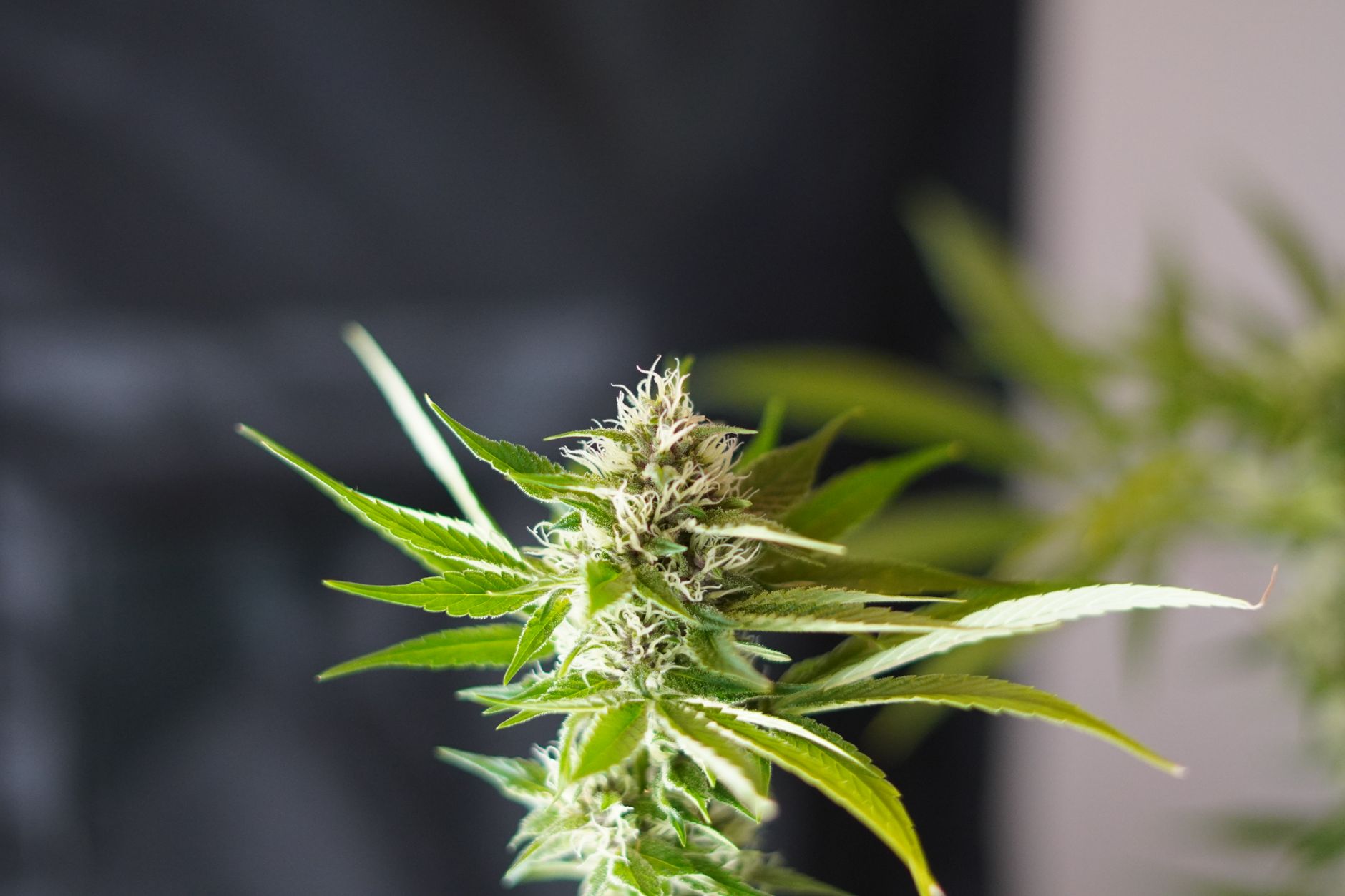
Most UK growers blame their seeds when yields disappoint. The real culprit is almost always the canopy. Plants left to grow unguided throw 80% of their energy into one dominant cola, leaving every lower bud starved of light and producing popcorn at best. Low stress training (LST) changes that equation completely, and it costs nothing but a few cable ties and twenty minutes a week.
- What is low stress training?
- Why LST matters in a small UK grow space
- LST vs topping: which should you choose?
- How to LST cannabis step by step
- LST on autoflowers: what changes?
- The Anchor Rule: our named framework
- Common LST mistakes and how to fix them
- Which training method should you use?
- What happens if you choose wrong
- FAQ
- Sources
- ✓ UK growers working in tents smaller than 1.2 m × 1.2 m
- ✓ First-time trainers wanting a no-cut method
- ✓ Autoflower growers who can't afford recovery time
- ✓ Anyone seeing popcorn buds on lower branches
- ✓ Indoor growers hitting their light's height limit
- ✗ Growers seeking maximum yield via aggressive defoliation
- ✗ Outdoor plots with unlimited vertical space
- ✗ Plants already mid-flower (too late to reshape the canopy)
- ✗ Stressed or root-bound plants that haven't recovered
What is low stress training?
Low stress training is a technique that bends and ties down the main stem and side branches to alter the plant's shape without making any cuts.
The mechanism is apical dominance. In a natural, untrained plant, the growing tip produces auxins that travel downward and suppress lateral shoot growth. Bending the main stem horizontally interrupts that flow, signalling the plant to promote every bud site along the bent stem equally.
The result is a flat, bush-like canopy rather than a Christmas-tree silhouette. Published research on light penetration in dense canopies, including work referenced by Frontiers in Plant Science, consistently shows that canopy uniformity at a fixed PPFD is the single largest determinant of indoor yield per watt.
LST is the best first training technique for any UK grower. It has no recovery period, no risk of killing the plant, and it works on every genetic type. Master this before you touch scissors.
Why LST matters in a small UK grow space
The average UK home tent is 60 cm × 60 cm or 80 cm × 80 cm. After fitting a LED board, an inline fan, and a carbon filter, you're left with roughly 80, 100 cm of usable canopy-to-light distance.
A mid-sized feminised indica can stretch 50, 70% of its veg height during the first two weeks of flower. That stretch alone can burn the upper cola against the light if the canopy starts too tall entering 12/12.
LST solves two problems at once: it keeps the plant within the available headroom, and it spreads the canopy laterally to fill dead space at the edges of the tent where light would otherwise be wasted. Looking at questions that come up most often from UK growers in compact spaces, headroom management is the complaint that leads almost every conversation about disappointing harvests.
- A 60 cm × 60 cm tent fitted with a 100 W LED at 600 PPFD can realistically produce 60, 90 g from one trained plant, versus 30, 45 g untrained.
- An 80 cm × 80 cm tent at 800 PPFD can yield 120, 160 g from two trained plants under a flat canopy.
- Aggregated grower journals show that every 10 cm of canopy height saved by LST typically translates to 5, 8% more usable light at bud level.
For grows under 1 m × 1 m, LST is not optional , it's the difference between a functional canopy and a chaotic vertical mess. Start training before the plant outgrows the available headroom.
LST vs topping: which should you choose?
Topping removes the main growing tip to force two new colas. It's effective, but it requires 5, 10 days of recovery before growth resumes , a serious problem for autoflowers that have a fixed life cycle regardless of stress.
LST does not interrupt the growth clock. The plant keeps growing every day while you reshape it. That's why LST is almost universally recommended for autoflowering seeds, while topping suits feminised photoperiod strains that can recover during an extended veg phase.
| Factor | LST | Topping |
|---|---|---|
| Cuts required | None | Yes (main stem) |
| Recovery time | 0 days | 5, 10 days |
| Safe for autoflowers | Yes | Risky |
| Yield increase | 30, 40% | 40, 60% (photoperiod) |
| Beginner-friendly | High | Medium |
| Best for small tents | Yes | Yes, with experience |
If you're growing autoflowers or you've never trained before, start with LST. Add topping to your toolkit once you've completed at least two successful LST runs and feel confident reading plant responses.
How to LST cannabis: a step-by-step method
Step 1: Gather your materials
You need soft plant ties or twist ties, a pot with holes or clips around the rim, and optionally bamboo stakes as anchor points. Never use wire that cuts into the stem.
Step 2: Wait for the right growth stage
Start when the plant has 4, 6 nodes and the main stem is pencil-thickness. Too early and the stem is fragile; too late and it has lignified and will snap under bending pressure. For most genetics this falls at 14, 21 days from germination.
Step 3: Make the first bend
Gently bend the main stem away from the pot's centre at roughly 90 degrees. Secure it to a rim clip or stake with a soft tie just below the growing tip. Do not force it , if you feel resistance, bend a little less and return over 2, 3 days.
Step 4: Train secondary branches
As the lower side branches grow taller than the bent main stem, tie those down too, spreading them like spokes on a wheel. This is where most growers under-train , they bend the main cola and stop there, leaving tall lateral branches unchecked to dominate again.
Step 5: Adjust every 2, 3 days through veg
A fast-growing plant can lift a tie in 48 hours. Check daily, reposition ties as new growth emerges, and continue until stretch ends (roughly week 2, 3 of flower). After that, stems have lignified and reshaping is no longer possible.
The most common LST error is stopping too soon. One bend is not LST , it's the beginning of LST. Commit to adjusting ties every 2, 3 days through the whole vegetative stage and the first 10, 14 days of stretch.
LST on autoflowers: what changes?
Autoflowers flower on an internal timer, not a light cycle. Most finish in 70, 90 days total from germination, leaving a veg window of only 20, 30 days before flower sites begin forming. That compressed timeline makes every training decision time-sensitive.
Start bending at day 14 at the latest. By day 21, 25, the window to reshape the canopy is closing. Many popular auto-flowering indica seeds stay compact enough that a single first bend and 3, 4 secondary tie-downs is all you need.
- Never top an autoflower in its first 20 days , the lost recovery time directly costs yield.
- Fabric pots with pre-drilled or clip-on rim anchors are easier to work with than plastic pots for tie points.
- Keep EC at 1.2, 1.6 mS/cm and RH at 55, 65% during training; stressed environmental conditions slow recovery from even gentle bending.
Autoflower LST should be viewed as a 14-day sprint, not an ongoing project. Get the canopy flat by day 25, then let the plant flower without further interference. Late adjustments during flower cause more stress than benefit.
The Anchor Rule for small UK tents
Every new node that rises above the tent's midpoint must be tied down within 48 hours, or it becomes the new apical dominant and defeats your previous training.
Formula: Count your tent's usable height (light hang height minus 30 cm minimum clearance). Divide by 2. Any branch tip crossing that midpoint line gets tied immediately.
Worked example: A 120 cm tent with a light hung at 100 cm and 30 cm clearance gives 70 cm of usable canopy. Midpoint = 35 cm from the pot rim. A side branch hitting 35 cm on Wednesday gets tied on Wednesday , not on Friday when you remember.
Common LST mistakes UK growers make
Reviewing the support questions and public grower forum threads that come up most often, the same failure modes appear across beginner runs. Here's how to recognise and fix each one.
Mistake 1: Starting too late
Bending a thick, woody stem in late veg risks snapping it. By week 4, most indica genetics have stems stiff enough to resist gentle bending. Start at week 2, when the stem bends like a drinking straw.
Mistake 2: Only training the main cola
Bending the main stem solves half the problem. The side branches, now freed from apical suppression, race upward within a week. Tie every branch that rises above your midpoint. This is where most stretch happens and most canopies lose control.
Mistake 3: Using wire or string that cuts the stem
Wire bites into the stem as it thickens, restricting vascular flow. Soft silicone ties or strips of nylon stocking are ideal. Check ties every 3, 4 days and loosen before they tighten.
Mistake 4: Continuing to LST during mid to late flower
After week 3 of flower, bud sites are actively developing. Disturbing stems causes stress responses that can pause development for 3, 5 days. Stop bending by week 3 of flower , the canopy shape is set by then anyway.
Mistake 5: Ignoring environmental parameters during training
Plants that are underwatered, over-fed, or sitting in low-RH air (below 45%) recover slowly from bending. Keep VPD in the 0.8, 1.2 kPa range during active training weeks. A wilting plant under bend stress can take 4, 5 days to bounce back instead of the usual 12, 24 hours.
Most LST failures trace back to one of two causes: starting too late, or training inconsistently. Fix both by adding "check ties" to your daily grow routine from week 2 onward.
Which training method should you use?
- Autoflower plant → LST only (no cuts; start day 14)
- First grow ever → LST only (no margin for error)
- Compact feminised indica in a small tent → LST + light defoliation at week 3 of flower
- Tall feminised sativa in a medium tent → LST + topping at node 4 during extended veg
- Maximum yield, longer veg allowed → Topping, LST on all resulting colas, consider SCROG net
- Plant already showing flowers → No training at all; focus on environment
- Beginner with high-yield genetics → indoor-optimised strains + LST only
When in doubt, choose LST. The downside risk is near zero, the upside is consistent 30, 40% yield improvement, and every lesson learned transfers directly to more advanced techniques later.
Ready to put this into practice? Our best strains for indoor growing include compact, fast-finishing genetics that respond exceptionally well to LST in small UK spaces. Use our strain finder to match genetics to your exact tent dimensions and goals.
What happens if you choose wrong
- Strain: compact auto indica
- LST started: day 14
- Canopy height entering flower: 28 cm
- Light clearance: 42 cm (safe at 600 PPFD)
- Harvest: 90, 110 g from one plant
- Risk level: Low
Even canopy, every bud site at near-equal PPFD, no burn, full potential realised.
- Strain: same compact auto indica
- No training applied
- Canopy height entering flower: 55 cm
- Light clearance: 15 cm (light burn zone)
- Harvest: 40, 55 g from one plant
- Risk level: High
Top cola burned, lowers popcorn, half the potential wasted , same seed, same light, same tent.
Bottom line: the only variable between these two scenarios is twenty minutes of training in week two. The genetics, the tent, and the light were identical.
Looking for compact genetics that reward LST in a small UK tent?
Browse Indoor-Ready SeedsFrequently Asked Questions
What is the best age to start LST on a cannabis plant?
Can I do LST on an autoflower?
How much can LST increase my yield?
What should I use to tie down branches for LST?
Why did my plant snap during LST?
Should I LST during flowering?
Do I need to defoliate as well as LST?
My autoflower started flowering before I could LST , what now?
Is LST better than SCROG for a small tent?
Can LST help with heat management in a small UK tent?
How many tie-down points do I need for effective LST?
What pot size works best for LST in a UK small grow?
Explore our full range of cannabis seeds suited to UK indoor grows , compact, resilient genetics selected for performance in small spaces.
Shop All Cannabis SeedsSources
- Frontiers in Plant Science , canopy light distribution research
- Journal of Cannabis Research , cultivation and yield studies
- Met Office UK Climate Averages , temperature and growing season data
- RHS Hardiness Ratings , UK plant hardiness guidance
- PubMed , peer-reviewed cannabis cultivation literature
Ready to Start Growing?
Browse over 1,200 premium cannabis seeds with discreet shipping to all the United Kingdom and our 95% germination guarantee.
Shop Cannabis Seeds