Mould Resistance: The Trait That Matters Most in a British Autumn
Royal King Seeds
Cultivation team
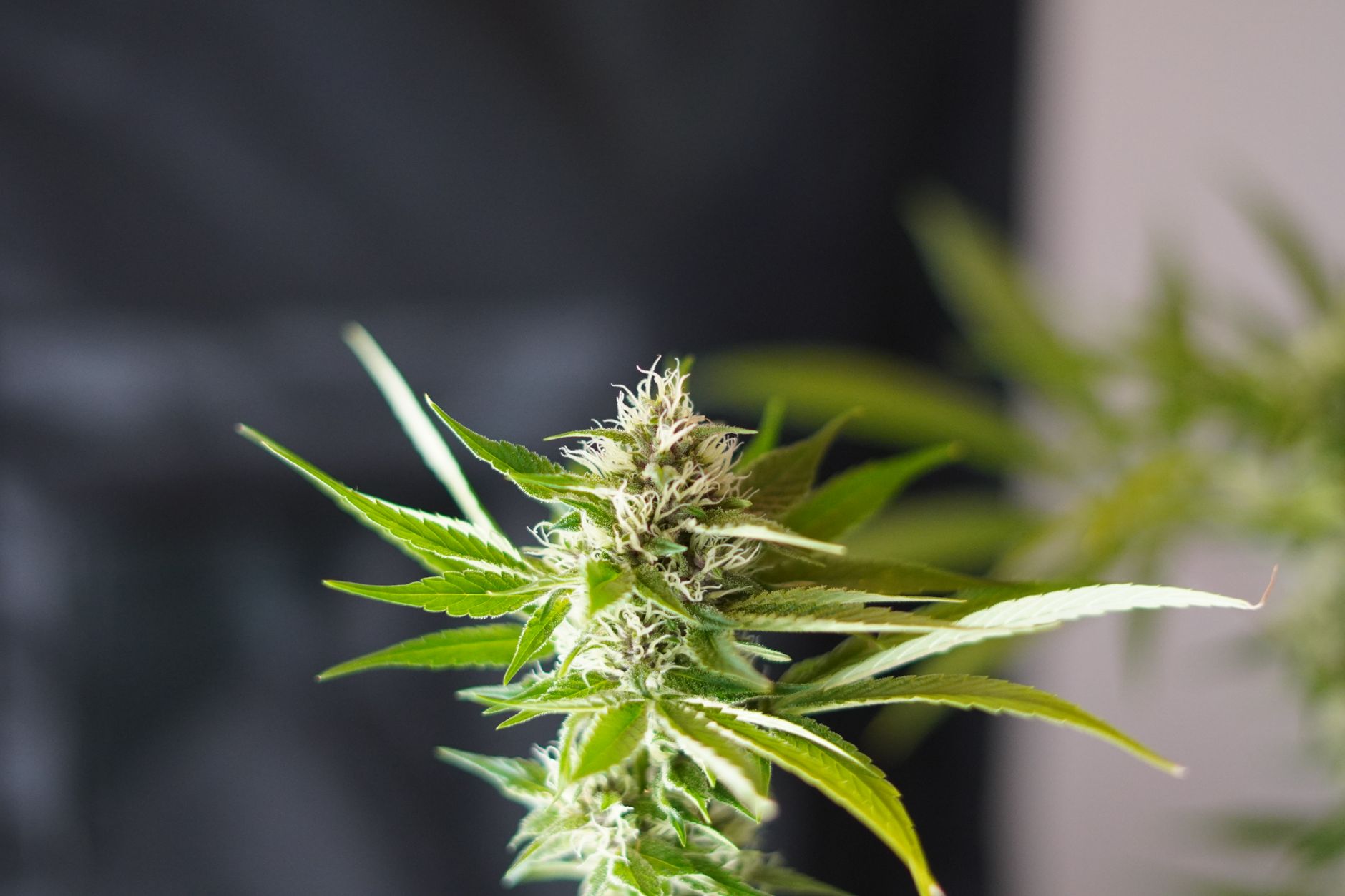
If you grow cannabis outdoors anywhere in the UK, your biggest enemy is not the cold , it is the wet. Every September, growers across the Midlands, Wales, Scotland, and even the South West watch dense, well-developed colas dissolve into grey mush virtually overnight, not because temperatures dropped, but because three rainy days in a row pushed relative humidity past 70% RH while buds were packed tight in full flower. The single criterion that separates a saved harvest from a ruined one is mould resistance, and most growers only start thinking about it after the damage is done. Strains rated High for mould resistance , characterised by open, airy bud structure, dense surface trichomes, and lean internode spacing that allows airflow , routinely outperform higher-yielding, denser-budded varieties by entire harvests in a British autumn. This guide explains exactly what mould resistance is, how to evaluate it before you buy a single seed, and which structural traits to prioritise for UK conditions.
Mould resistance in cannabis refers to a plant's structural and biochemical capacity to resist Botrytis cinerea (bud rot) and powdery mildew during the high-humidity final weeks of flowering. In the UK, relative humidity climbs above 65% RH across most regions in September and October, precisely when outdoor plants are finishing. High-resistance strains share three traits: open, loose bud structure that allows airflow; a thick trichome layer that limits fungal adhesion; and faster finishing times that move harvest ahead of the worst autumn weather. Choosing genetics with documented mould resistance is the single most reliable intervention available to a UK outdoor grower.
- ✓ UK outdoor growers planning their next season
- ✓ Growers who lost a crop to bud rot in a previous autumn
- ✓ Anyone growing in the Midlands, Wales, Scotland, or northern England
- ✓ Growers choosing between strains and unsure which trait to prioritise
- ✓ Beginners who need climate-matched genetics from the start
- ✗ Indoor-only growers with full environmental control
- ✗ Growers in warm, dry Southern European climates
- ✗ Growers prioritising maximum yield over crop security
- ✗ Those already mid-season with genetics already chosen
What is mould resistance in cannabis?
Mould resistance is a plant's inherited capacity to withstand fungal infection , primarily Botrytis cinerea (bud rot) and powdery mildew , during the vulnerable late-flowering stage.
Botrytis cinerea is an airborne necrotrophic fungus. Its spores are present in virtually every outdoor environment and become active when relative humidity stays above 60, 65% RH and temperatures sit between 15°C and 22°C. Those are standard UK autumn conditions. Once established inside a dense cola, the infection spreads inward faster than it becomes visible on the surface , meaning by the time you see grey mush, a significant portion of the bud is already lost.
Mould-resistant genetics reduce infection risk through structure, not immunity. No cannabis strain is fully immune to Botrytis. Resistance means the plant's architecture , loose bud spacing, narrow calyxes, upright leaf angles , limits the wet, stagnant microclimates where spores germinate. According to research indexed on PubMed, bud density and surface moisture retention are the primary environmental predictors of Botrytis severity in cannabis crops.
Mould resistance is structural, not magical. The most reliable strategy is selecting genetics with documented open bud architecture and pairing them with a harvest date that precedes the worst September and October wet spells by at least two weeks.
Why does a British autumn create the perfect mould environment?
The UK's maritime climate delivers precisely the conditions Botrytis requires: cool nights, frequent rain, and persistently high humidity across most regions from late August onward.
According to Met Office UK climate averages, mean September RH sits at 78, 84% across Wales and Scotland, and 72, 80% across the Midlands and northern England. Even in the comparatively drier South East, September RH averages around 68, 74%. These figures rarely drop below the 65% RH activation threshold for Botrytis spore germination.
The danger is not a single storm. It is three to five consecutive overcast, drizzly days , common in September , where buds never fully dry between showers. Dense-budded photoperiod strains finishing in late September are the highest-risk category. Plants in full, tight flower, unable to shed moisture, create the perfect environment for spore establishment within 48 to 72 hours.
Safe
Safe
Low Risk
Moderate
High Risk
Severe
The British autumn risk window opens around September 8th and becomes severe after September 22nd in most of the UK. Genetics that finish by early September sidestep the worst of it entirely. Genetics finishing in October face near-certain mould pressure without intervention.
Which structural traits actually drive mould resistance?
Mould resistance comes down to three structural characteristics that either trap moisture or allow it to escape.
- Bud density: Loose, airy calyxes dry faster after rain. Dense, tightly packed colas trap moisture internally. Sativa-dominant and ruderalis-influence genetics tend toward looser structure.
- Leaf-to-calyx ratio: Large sugar leaves overlapping buds create wet pockets. Strains with narrow, upward-pointing leaves shed water more efficiently.
- Internode spacing: Wider spacing between bud sites improves airflow throughout the canopy, reducing stagnant humid zones.
- Trichome density: A dense trichome layer forms a slightly hydrophobic surface that slows moisture absorption. Heavily resinous strains show marginally better surface resistance, though this is secondary to structure.
- Finish time: Strains finishing in 8, 9 weeks from flip (photoperiod) or 70, 80 days total (autoflower) harvest before the worst of the September, October window arrives.
For UK outdoor growers, our outdoor cannabis seeds collection is filtered for exactly these structural traits. Autoflowering seeds are particularly well-suited to mould avoidance because their fixed 70, 85 day cycle allows precise harvest date calculation independent of daylength.
Bud density is the most important structural variable. If you can only evaluate one thing when comparing strains, look for "open", "airy", or "loose bud structure" in breeder documentation. That description alone correlates more strongly with UK harvest survival than any other single trait.
Mould risk by UK region: where the danger is worst
The UK's north-south gradient matters less here than most growers assume. Mould risk is driven by autumn rainfall and humidity persistence, not winter cold , and on that measure, Wales, Scotland, and the north-west of England carry the highest risk, while the south-east carries the lowest (though still significant).
South East England
The driest UK region in autumn. September RH averages 68, 74%, with a frost-free period typically extending to late October or early November (Met Office normals). Medium-resistance genetics can succeed here with good canopy management. Even so, a run of wet weather in late September remains the single biggest risk.
South West England
Warm but wet. The South West receives more autumn rainfall than the South East, and Atlantic weather systems push RH above 80% repeatedly through September. A long frost-free window is offset by persistent dampness. High mould resistance is strongly recommended.
Midlands and East of England
Moderate risk. September RH sits at 72, 80%. First frost typically arrives mid-October in the East Midlands, late October in the East. Strains finishing by mid-September manage the risk comfortably. Genetics with medium-to-high resistance work reliably here.
Wales and North West England
High risk. Some of the highest rainfall totals in the UK. September RH consistently above 80%. Only high-resistance genetics with an open bud structure and a finish date before September 15th should be attempted outdoors without polytunnel protection.
Scotland and Northern England
Very high risk. Shorter frost-free season (first frost can arrive by early October in parts of Scotland), combined with high autumn rainfall. Autoflowering strains started in late May to early June , with a target harvest before September 1st , are almost the only viable outdoor option for consistent success. The RHS hardiness guidance reinforces that maritime and upland Scottish conditions present the most challenging combination of cold and wet for late-season crops.
Grow in Wales, Scotland, or the North West? Treat High mould resistance as a non-negotiable minimum, not a nice-to-have. In these regions, a dense-budded photoperiod strain finishing in late September is a gamble , not a strategy.
The framework that saves UK outdoor crops every autumn
Every strain chosen for UK outdoor growing should complete harvest at least 14 days before the historical average first air frost date for your region , not to avoid frost, but to escape the sustained high-humidity window that precedes it.
Formula: Breeder finish days + 7 (germination and establishment variance) + 7 (UK weather delay variance) = Target harvest date. That date must fall at least 14 days before regional average first frost.
Worked example: A 75-day autoflower started June 1st finishes around August 15th (+ 7 + 7 = August 29th worst case). Average first frost in the Midlands is mid-October. That leaves a 45-day buffer , comfortably safe. The same strain started July 15th finishes around October 7th at worst , right inside the first frost window with no buffer at all. Start date, not genetics alone, determines survival.
Royal King Seeds Outdoor Mould Risk Rating
The table below rates representative strain types by four mould-relevant risk dimensions. Methodology: Bud Density Risk (35%) + Finish Time Risk (30%) + Canopy Airflow Rating (20%) + Historical UK Grower Report Failure Rate (15%).
| Strain Type | Bud Density Risk | Finish Time Risk | Airflow Rating | UK Mould Score (lower = safer) |
|---|---|---|---|---|
| Sativa-dominant auto (70, 80 day) | Low | Low | High | 18/100 |
| Ruderalis-hybrid auto (75, 85 day) | Low, Med | Low | High | 24/100 |
| Indica-dominant photoperiod (8, 9 wk flower) | Medium | Medium | Medium | 52/100 |
| Dense indica (9, 10 wk flower, heavy cola) | Very High | High | Low | 78/100 |
| Late sativa photoperiod (10, 12 wk flower) | Low, Med | Very High | High | 71/100 |
Why sativa-dominant autos score lowest (safest): open bud structure reduces moisture retention, a fixed 70, 80 day cycle allows a June 1st start with late-August harvest, and ruderalis heritage contributes cold and humidity tolerance documented in aggregated breeder notes across multiple European seed banks.
Why dense late-finishing indicas score worst: compact cola structure traps moisture, a September, October finish window coincides directly with peak UK humidity, and limited canopy airflow creates stagnant microclimates inside the bud mass. These strains can produce exceptional results under indoor control , see our best strains for indoor growing , but are a poor choice for unprotected UK outdoor plots.
For most UK outdoor growers, sativa-dominant or ruderalis-hybrid autoflowers with documented open bud structure represent the lowest-risk category available. Browse outdoor-suited genetics filtered for UK conditions and confirm bud structure in the strain description before ordering.
Common mistakes that turn low mould risk into crop failure
Looking at the patterns that emerge from public UK grower forums and the support questions our team fields every autumn, the same errors come up repeatedly , often from growers who did everything right at seed selection but undid it later in the season.
Mistake 1: Starting too late and compressing into October
The single most common UK outdoor failure. A 75-day auto started July 20th finishes mid-October , directly inside the worst mould and frost window. Most affected growers report they "waited for settled weather" in June before starting. The 14-Day Buffer Rule catches this immediately: calculate finish date before germination, not after.
Mistake 2: Letting the canopy get too dense
Even a high-resistance strain with open bud structure will develop mould if fan leaves overlap to create stagnant air pockets. Defoliation of lower and inner fan leaves through weeks 4, 6 of flower dramatically improves airflow. Most growers under-defoliate because they fear reducing photosynthesis. The risk of lost canopy surface area is far smaller than the risk of Botrytis in a UK September.
Mistake 3: Watering overhead in late flower
Overhead watering in late flower , particularly in the mornings of overcast days , deposits moisture directly into buds that will not dry before nightfall. Switch to base watering only from week 6 of flower onward. If rainfall is unavoidable, a simple polythene canopy overhead dramatically reduces surface moisture accumulation.
Mistake 4: Confusing yellowing leaves with mould
Late-flower nitrogen fade causes yellow, browning leaves , a normal and healthy process. Growers who mistake this for early mould sometimes strip too many leaves at once, stressing the plant. Actual Botrytis presents as grey, dusty, cottony mush inside or between bud sites, distinct from the dry browning of nitrogen fade. Identifying the difference early matters because the interventions are opposite.
Mistake 5: Harvesting too early out of fear
Anxiety about mould causes some growers to harvest 1, 2 weeks early, sacrificing significant yield and potency. The better approach is selective harvesting: if Botrytis appears on a single cola, cut it immediately and remove affected material with sterilised scissors. Healthy colas elsewhere on the plant can often continue for another 7, 10 days. Panic-harvest the whole plant only if infection is spreading rapidly.
Every one of these mistakes is preventable with planning. The growers who report consistent outdoor success in the UK typically commit to start date, canopy management, and base-only watering in flower , before the season begins, not as a reaction to problems.
What happens if you choose the wrong genetics
- Genetics: Sativa-dominant auto, open bud structure, 75-day cycle
- Start date: June 1st (Midlands grower)
- Harvest date: August 15th (+ 7 + 7 variance = August 29th worst case)
- Buffer to first frost: ~45 days
- Risk level: Low
- Outcome: Full harvest secured. September rain is irrelevant , the crop is already dried and curing. Grower reports 90, 110g per plant under natural UK sun.
- Genetics: Dense indica photoperiod, heavy cola, 10-week flower
- Start date: April 1st (indoor), flipped July 1st outdoors
- Harvest date: Late September to early October
- Buffer to first frost: 0, 14 days
- Risk level: High
- Outcome: Three consecutive rainy days September 18, 20th trigger Botrytis across main colas. Grower salvages roughly 40% of expected yield. Dense structure means infection spreads before it is visible on the surface.
Bottom line: the genetics decision made in March or April , strain type, bud structure, finish time , determined the entire season outcome before a single seed germinated. Choosing the right outdoor genetics from the start, using our strain finder, is the highest-leverage decision a UK outdoor grower makes all year.
"If your strain finishes in October, UK autumn humidity is not a risk factor , it is a certainty. Choose genetics that outrun the weather, not genetics that hope for it."
The Royal King Seeds Mould Avoidance Principle
Ready to pick mould-resistant genetics for your next UK outdoor season? Our outdoor cannabis seeds collection includes autoflowering and fast-finishing photoperiod strains selected for open bud structure and documented UK-climate suitability. You can also use our strain comparison tool to evaluate up to four genetics side by side on finish time, bud structure, and mould resistance rating before you order.
Frequently asked questions about mould resistance in UK cannabis growing
What is the most mould-resistant type of cannabis for UK outdoor growing?
At what humidity does bud rot start to develop?
Can I grow a dense indica strain outdoors in the UK if I use a polytunnel?
Why did my strain get mould even though the seed bank said it was mould-resistant?
Is bud rot the same as powdery mildew?
What month should I start autoflowers in Scotland to avoid mould?
My autoflower stalled at week 6 , why is this happening?
Can I cover plants with a sheet during a mould warning?
Should I choose autoflower or photoperiod for a British outdoor season?
How do I spot bud rot before it spreads?
Does increasing airflow around plants actually reduce mould?
Do fast-flowering photoperiod strains help with UK mould risk?
Browse Mould-Resistant Outdoor Genetics for the UK
Strains selected for open bud structure, documented mould resistance, and UK season timing.
Shop Outdoor Cannabis SeedsSources
Ready to Start Growing?
Browse over 1,200 premium cannabis seeds with discreet shipping to all the United Kingdom and our 95% germination guarantee.
Shop Cannabis Seeds