CBD-Dominant Seeds: What the Ratios Mean
Royal King Seeds
Cultivation team
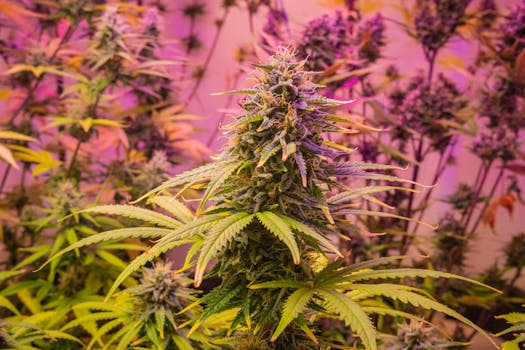
Most people buying CBD seeds are shopping blind. They see a ratio printed on a seed bank listing, 1:1, 2:1, 10:1, 20:1, and pick one without knowing what any of those numbers actually means in the grow room or the body. That gap between label and reality is where most CBD seed purchases go wrong.
The ratio is not a marketing badge. It is a cannabinoid architecture that shapes every downstream effect: how much psychoactivity you feel, how CBD modulates THC, and what the harvested flower will actually deliver. Picking the wrong ratio is a full-season mistake you can't undo mid-grow.
This guide breaks every major CBD-to-THC ratio into plain numbers, explains the mechanism behind CBD-THC interaction, and gives you a clear decision framework so your next seed selection is deliberate, not accidental.
- ✓ Growers choosing CBD seeds for the first time
- ✓ Buyers confused by ratio labelling on seed listings
- ✓ UK growers wanting near-zero THC output from their crop
- ✓ Anyone weighing a balanced 1:1 versus a high-CBD 20:1
- ✓ Growers who want to understand CBD-THC interaction before they plant
- ✗ Growers primarily chasing high THC yield
- ✗ Anyone looking for recreational-focused genetics
- ✗ Medical diagnosis or prescribing advice
What does the CBD-to-THC ratio actually mean?
The CBD-to-THC ratio describes the proportion of cannabidiol (CBD) to tetrahydrocannabinol (THC) in the finished, dried flower of that genetic line. It is not a percentage on its own. It is a relationship between two numbers.
A seed listed as 20:1 (CBD:THC) means for every 20 milligrams of CBD present, there is roughly 1 milligram of THC. If that strain tests at 20% CBD and 1% THC by dry weight, the ratio holds. The absolute percentages matter too, but the ratio tells you the shape of the experience before percentages enter the conversation.
Ratios are set by genetics. The enzyme THCA synthase and CBDA synthase compete for the same precursor molecule, CBGA. Strains bred for high CBD carry genetic expressions that favour CBDA synthase output, which is why you cannot accidentally turn a 1:1 strain into a 20:1 by changing your grow conditions. The ratio is locked in at the breeding stage.
How does CBD interact with THC in the body?
CBD does not simply dilute THC. It interferes with THC's ability to bind to CB1 receptors in the brain, acting as a partial antagonist at those receptor sites. Research published in the Journal of Cannabis Research describes CBD as a negative allosteric modulator at CB1, meaning it changes the receptor's shape in a way that reduces how strongly THC can activate it.
In practical terms: the more CBD present relative to THC, the more blunted the psychoactive response. At a 1:1 ratio, most users report a noticeably softened, more grounded version of a THC experience. At 20:1, the THC content is typically so low (often under 1%) that most users report no intoxication at all.
This interaction is also why some researchers and growers refer to CBD as a "safety buffer" in high-THC strains. The same mechanism that softens a 1:1 experience also reduces anxiety associated with high-THC use, though CBD alone is not a guaranteed counteragent.
The major ratios explained: 1:1, 2:1, 5:1, 10:1, 20:1
Each ratio band produces a meaningfully different experience. Here is what breeder documentation and aggregated grower reports show for each one.
1:1 (CBD:THC)
Equal parts CBD and THC. Typical cannabinoid content reported by breeders sits around 8-12% each. The THC is present enough to produce clear psychoactive effects, softened but not eliminated by the CBD. Most growers describe the experience as a rounded, manageable version of a mild THC high. Best suited to experienced users who want both cannabinoids active simultaneously.
2:1 (CBD:THC)
CBD leads at roughly double the THC content. At typical percentages (around 10% CBD / 5% THC), psychoactivity is present but noticeably reduced compared to equal ratios. This is often the entry point for users transitioning from pure THC genetics toward CBD-dominant profiles.
5:1 (CBD:THC)
At five parts CBD to one part THC, THC content in the finished flower commonly sits in the 2-4% range. Most users at this ratio report little to no intoxication, though some sensitivity to THC may still produce a subtle effect. A good middle-ground for growers wanting meaningful CBD expression without committing fully to a no-THC profile.
10:1 (CBD:THC)
THC is typically under 2% at this ratio, often around 1-1.5% by dry weight. Psychoactive effect is minimal for the vast majority of users. Breeder documentation across several well-known CBD seed lines places total CBD at 12-18% at this ratio range, delivering a strongly CBD-forward profile with negligible intoxication.
20:1 and beyond (CBD:THC)
The highest end of CBD dominance. THC content is commonly 0.5-1% or below. For UK growers, this ratio band is the most relevant for staying well inside legal grey areas, since the intoxicating component is negligible. Our CBD seed collection includes genetics at this ratio tier for growers prioritising a near-zero THC profile.
Ratio comparison: at a glance
| Ratio (CBD:THC) | Typical CBD % | Typical THC % | Psychoactivity | Best for | Beginner-friendly |
|---|---|---|---|---|---|
| 1:1 | 8-12% | 8-12% | Moderate, softened | Experienced users, balanced effect | No |
| 2:1 | 10-14% | 5-7% | Low to moderate | Transitioning from THC-dominant | Moderate |
| 5:1 | 10-15% | 2-4% | Very low | CBD-focused with minor THC | Yes |
| 10:1 | 12-18% | 1-2% | Minimal | Near-zero intoxication priority | Yes |
| 20:1+ | 15-20%+ | <1% | Near zero | Strict CBD-only profile | Yes |
How to read a CBD ratio on a lab report or seed listing
Step 1: Locate the CBD and THC figures
On a Certificate of Analysis (COA) or seed listing, find the CBD% and THC% figures. These are usually expressed as a percentage of dry weight. Ignore THCA and CBDA columns for ratio calculations unless you are adjusting for decarboxylation.
Step 2: Divide CBD by THC
Divide the CBD figure by the THC figure. If a strain shows 15% CBD and 1.5% THC, the ratio is 10:1. If it shows 10% CBD and 10% THC, the ratio is 1:1. This is the only arithmetic you need.
Step 3: Cross-check the absolute percentages
A 10:1 ratio at 1% CBD and 0.1% THC is very different to a 10:1 ratio at 15% CBD and 1.5% THC. The ratio describes proportion; the percentages describe magnitude. You need both numbers to understand what the strain actually delivers.
Step 4: Note whether the figures are breeder-stated or lab-verified
Breeder-stated ratios are targets based on phenotype averages. Lab-verified COAs from independent testing facilities (such as Steep Hill or similar ISO-accredited labs) are measured data. Treat breeder figures as a reliable guide with a realistic variance of plus or minus 20% on individual phenotypes.
Does the ratio matter more than the total cannabinoid content?
The ratio and the absolute percentages are both important, but for different things. The ratio determines the direction of the experience: how much THC is being modulated by CBD. The total CBD percentage determines the magnitude of the CBD effect.
Research cited at NIH NCCIH notes that the interaction between cannabinoids and terpenes (the entourage effect) means total cannabinoid content alone doesn't predict outcomes. A 15% CBD strain with a rich terpene profile may deliver a more complex effect than an 18% CBD strain with a flat terpene profile.
For UK growers browsing CBD strains, the practical rule is: use the ratio to shortlist (determine psychoactivity level you want), then use total CBD% to compare within that ratio band.
Every CBD seed buyer should apply this check before purchasing: subtract 1 from the ratio number, divide 100 by that result, and the answer is roughly the percentage of the effect that THC will contribute. The higher that percentage, the more psychoactive your harvest.
Formula: THC contribution estimate = 100 ÷ ratio number. At 1:1, THC contributes ~100% of its full effect. At 10:1, it contributes ~10%. At 20:1, it contributes ~5%.
Worked example: You are deciding between a 5:1 and a 10:1 seed. At 5:1, THC contributes roughly 20% of a full THC response. At 10:1, that drops to roughly 10%. If you want to avoid any perceptible intoxication, the 10:1 is the safer pick , the 5:1 may still register for sensitive users.
Common mistakes when buying CBD seeds
Mistake 1: Assuming "CBD seed" means zero THC
Any cannabis plant produces some THC. Even a 20:1 strain will have measurable THC in the flower. Only hemp-specific genetics bred to stay under 0.2% THC can claim near-zero status, and even those are not absolute. Never assume a CBD label means THC-free.
Mistake 2: Choosing ratio without checking absolute CBD%
Two strains can share a 10:1 ratio with wildly different total CBD content. One may test at 5% CBD, the other at 18%. The ratio tells you proportion; it doesn't tell you how much CBD is actually there.
Mistake 3: Picking a 1:1 expecting no high
A 1:1 ratio with 10% THC will produce a noticeable psychoactive effect. The CBD moderates it, but it doesn't eliminate it. Buyers expecting a purely functional, non-intoxicating experience from a 1:1 seed are regularly disappointed. Set expectations based on the THC absolute figure, not just the ratio.
Mistake 4: Ignoring phenotype variance
Breeder ratios are averages across phenotypes. Aggregated grower data shows individual plants from the same seed batch can vary by as much as 20-30% from stated CBD/THC targets. If you need precise ratios, grow from feminised seeds and test finished flower where possible.
Mistake 5: Overlooking terpene data entirely
Terpenes like myrcene and linalool interact with both CBD and THC in ways that affect the overall profile. A CBD strain with high myrcene will feel more sedating than a CBD strain with high limonene, even at the same ratio. Breeder terpene notes are worth reading alongside the cannabinoid ratio.
Which CBD ratio should you choose?
Your goal → Recommended ratio
- Strictly zero intoxication → 20:1 or higher. THC under 1%, near-zero CB1 activity.
- CBD-dominant with barely perceptible THC → 10:1. Comfortable for most sensitive users.
- CBD-forward but open to mild THC presence → 5:1. Good transition ratio.
- Equal CBD and THC, balanced experience → 1:1. Requires experience with THC effects.
- First time growing CBD seeds, unsure → 10:1. The safest default for new CBD growers.
- Breeding or phenotype hunting for CBD expression → Start at 20:1 genetics and select for CBD-dominant phenotypes.
- Indoor grow, want fast harvest → Browse autoflowering CBD seeds for 70-85 day finish without light schedule management.
What happens if you choose the wrong ratio
- Strain: 20:1 CBD-dominant
- THC at harvest: ~0.8%
- CBD at harvest: ~16%
- Psychoactivity: negligible
- Outcome: Grower gets the CBD profile they wanted, no unintended intoxication, full-season grow aligns with stated goals.
- Strain: 1:1 balanced
- THC at harvest: ~10%
- CBD at harvest: ~10%
- Psychoactivity: noticeable, moderate
- Outcome: Grower who wanted a non-intoxicating CBD crop has spent an entire season growing a strain that produces a clear and unwanted psychoactive effect. The ratio decision at purchase determined the entire outcome.
Bottom line: One ratio decision at the seed-buying stage determines every downstream effect. There is no adjusting a 1:1 strain toward 20:1 through grow technique. Get the ratio right before you germinate.
Ready to pick the right CBD genetics? Browse our full range of CBD seeds with ratio data for every strain.
Browse CBD SeedsFrequently asked questions
What does a 20:1 CBD to THC ratio mean?
Will a 1:1 CBD THC strain get me high?
Is a higher CBD percentage always better?
Can I change the CBD-to-THC ratio by adjusting my grow conditions?
What is a good CBD percentage in a CBD-dominant seed?
Why did my CBD strain test higher in THC than the breeder stated?
Do autoflowering CBD seeds keep the same ratio as feminised versions?
What CBD ratio is best for beginners?
Can I grow CBD-dominant seeds outdoors in the UK?
What is the difference between CBD content and total cannabinoid content (TAC)?
My CBD seeds germinated slowly , is that normal?
Do CBD strains yield less than THC strains?
Not sure which category is right for you? Use our Strain Finder to filter by CBD ratio, cycle length, and grow environment , or browse the full cannabis seed catalogue.
Shop All SeedsSources
Ready to Start Growing?
Browse over 1,200 premium cannabis seeds with discreet shipping to all the United Kingdom and our 95% germination guarantee.
Shop Cannabis Seeds