Understanding THC Percentages on a Seed Listing
Royal King Seeds
Cultivation team
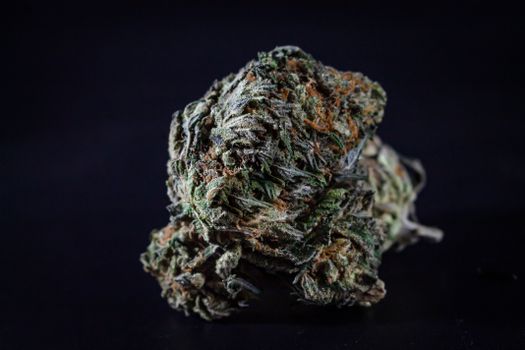
That number on the seed listing is misleading almost every grower who reads it. A strain listed at 28% THC does not guarantee 28% THC in your jar. It doesn't even guarantee 25%. Most growers are comparing seed listings as if the numbers are fixed facts, when they're actually genetic ceilings that require near-perfect conditions to reach. The difference between reading a THC percentage correctly and reading it naively can mean choosing entirely the wrong strain for your setup. This guide breaks down exactly what that number means, where it comes from, and how to use it without being burned by unrealistic expectations.
The THC percentage on a seed listing is the genetic ceiling measured under optimal conditions in breeder testing, not a yield-per-grow promise. Real-world harvests typically return 60 to 85% of that stated ceiling depending on light intensity, nutrient timing, harvest window, and cure quality. A listing reading 25% THC might reliably produce 18 to 22% THC in a well-run indoor grow, and less outdoors in a short British season.
- ✓ First-time seed buyers confused by THC claims
- ✓ UK growers comparing strains on potency
- ✓ Indoor growers dialling in their setup for max potency
- ✓ Anyone who's been disappointed by a "high THC" strain
- ✓ Growers who want to read a seed listing like a professional
- ✗ Medical dosing decisions (consult a clinician)
- ✗ Anyone seeking legal advice on THC limits
- ✗ Growers already expert in COA interpretation
What does the THC percentage on a seed listing actually mean?
The THC percentage on a seed listing is the genetic potential of that strain under optimal conditions. It is not a promise about what will grow in your tent or garden.
Think of it like a car's top speed printed on a spec sheet. The car can physically reach that speed, but only on a closed circuit with an expert driver and perfect conditions. Your daily commute will produce a different result.
Cannabis THC percentages work the same way. The figure on a seed listing reflects the ceiling the genetics are capable of, not the floor they're guaranteed to meet. How close you get depends entirely on how the plant is grown.
Read the THC percentage as a comparison tool, not an absolute. It tells you which strains are built for potency, not exactly what percentage will end up in your jar. Use it alongside terpene profile, grow difficulty, and cycle length when picking a strain.
Where does the breeder's THC figure come from?
Breeders derive THC percentages through controlled grows and third-party lab testing, typically using High Performance Liquid Chromatography (HPLC) or Gas Chromatography (GC) on cured flower samples from their best-performing phenotypes.
Those conditions are optimal by design: dialled lighting (often 800 to 1000 PPFD), precise nutrient programmes, controlled temperature (22 to 26°C), and harvested at peak trichome maturity. The resulting number reflects the genetic ceiling of the best expression of that strain.
What it doesn't reflect: the full range of phenotypic variation within a seed batch, grow conditions outside the lab, UK outdoor humidity, or a first-time grower's setup. According to research published in the Journal of Cannabis Research, THC concentrations vary substantially between individual plants of the same strain grown under the same conditions, often by 3 to 7 percentage points.
- Breeder tests: best-of-phenotype, optimal conditions
- Your grow: average phenotype, real-world conditions
- The gap: typically 15 to 40% below stated potential
- Exception: expert indoor setups with 800+ PPFD LED can approach the ceiling
The breeder's figure is a legitimate and useful data point. It just describes peak genetic capacity, not average real-world output. Trust it for relative comparisons between strains. Don't treat it as a guaranteed result.
What affects how much THC your plants actually produce?
Several environmental and timing variables directly determine where your harvest lands between the genetic floor and ceiling. Each factor carries measurable weight.
Light intensity and spectrum
THC synthesis scales with photon delivery. Aggregated grower journals and published cultivation research consistently show that plants receiving below 400 PPFD produce noticeably lower cannabinoid density compared to those running at 600 to 900 PPFD. Full-spectrum LED at adequate intensity is the single biggest lever indoors.
Harvest timing
Missing the peak trichome window by even two to five days causes significant THC degradation. Cloudy trichomes turning amber signal THC converting to CBN. Harvesting slightly early (mostly cloudy, a few amber) preserves maximum THC. This is where most growers lose potency without knowing it.
Nutrient balance in late flower
Excessive nitrogen in weeks 6 to 8 of flower suppresses resin production. Flushing or reducing feed to EC 1.0 to 1.2 in the final two weeks is widely reported to improve terpene density and cannabinoid expression. Conversely, phosphorus and potassium support trichome development during peak flower.
Temperature and humidity
UK outdoor growers face a specific challenge: cool wet Septembers stress resin development at the same time bud density peaks. Indoor growers should target 18 to 24°C in late flower with relative humidity at 40 to 50%. Drops below 15°C slow enzyme activity, capping cannabinoid synthesis.
Cure quality
A proper slow cure at 58 to 62% RH over two to four weeks allows enzymatic processes to complete and terpenes to stabilise. Rushing the cure with excess heat or poor airflow can reduce the effective potency of otherwise well-grown flower.
Genetics set the ceiling. Environment and timing determine whether you reach it. If your setup runs below 600 PPFD or your harvest timing is off, gaining 2 to 3% extra THC from a higher-listed strain won't help you. Fix the fundamentals first.
High THC vs mid-range THC: which matters more?
Not always the highest number. A strain listed at 25% THC with a rich terpene profile often delivers a more intense, longer-lasting experience than a 30% strain grown under identical conditions but with a flat cannabinoid profile.
This is what researchers call the entourage effect: the interaction between THC, minor cannabinoids (CBG, CBC, THCV), and terpenes (myrcene, limonene, beta-caryophyllene) that shapes the actual effect. A strain with 24% THC and high myrcene content is widely reported to produce a heavier, more sedating effect than a 28% strain dominated by pinene and low terpene density overall.
For UK growers browsing high THC seeds, the practical takeaway is this: compare THC percentages within roughly the same band (say, 20 to 25% vs 25 to 30%), then use terpene notes and grow difficulty to make the final call.
| THC Band | Typical Effect Profile | Best For | Grow Difficulty | Real-World Ceiling |
|---|---|---|---|---|
| 10, 18% | Mild, functional, balanced | Beginners, daytime use | Low to medium | 10, 16% |
| 18, 24% | Strong, good duration | Experienced growers | Medium | 16, 22% |
| 24, 28% | Very strong, noticeable potency ceiling | Well-dialled indoor setups | Medium to high | 20, 26% |
| 28%+ | Elite potency, highly variable | Expert growers with premium setups | High | 22, 28% under best conditions |
If you're running a standard 600W LED in a 1.2m tent, a 24% strain grown well will almost always outperform a 30% strain grown under the same conditions but pushed past its manageable threshold. Chasing the highest number on the listing can backfire.
Real example: two strains, two outcomes
Here's how the same grower setup can produce very different results depending on how the THC listing was read and acted on.
- Listed THC: 24%
- Setup: 600 PPFD LED, 20L pot, 18/6
- Harvest timing: Correct (mostly cloudy trichomes)
- Actual THC achieved: ~21%
- Effect duration: 90 to 120 minutes
- Outcome: Strong, satisfying harvest. Grower can grow it again with consistent results.
- Listed THC: 31%
- Setup: Same 600 PPFD LED, 20L pot, 18/6
- Harvest timing: 4 days late (amber trichomes)
- Actual THC achieved: ~18%
- Effect duration: 50 to 70 minutes (more CBN, less THC)
- Outcome: Disappointing. Grower blames the strain , the real culprits were setup mismatch and harvest error.
Bottom line: the lower-listed strain produced better real-world results because it was matched to the setup and harvested correctly. The higher-listed strain needed more light and tighter timing to meet its potential.
The 80% Rule: the simple formula most growers skip
In a well-run indoor setup (600 to 800 PPFD, correct feed, accurate harvest timing), expect to achieve 75 to 85% of the stated THC figure. In a first-time or outdoor UK grow, budget 60 to 70%.
Formula: Realistic THC = Listed THC × 0.75 (indoor, dialled) or Listed THC × 0.65 (outdoor UK / beginner)
Worked example: A strain listed at 26% THC, grown indoors at 700 PPFD with correct harvest timing: 26 × 0.80 = 20.8%. Outdoors in a typical UK September finish: 26 × 0.65 = 16.9%. That 10-point swing is entirely down to environment, not genetics.
This rule isn't pessimism. It's the realistic planning range that separates growers who are satisfied with every harvest from those chasing a number they can't reach in their current setup.
Use our yield calculator to map these variables across your planned grow before you pick a strain.
Myth vs reality: THC percentage edition
Higher THC on the listing always means a stronger effect.
Effect intensity also depends on terpene profile, minor cannabinoids, your personal tolerance, and consumption method. A 22% strain rich in myrcene and linalool is widely reported to feel more intense than a flat 28% strain.
The THC percentage is lab-tested on seeds directly.
Seeds contain no THC. The figure comes from testing cured flower grown from those seeds under breeder-controlled conditions. You're buying the genetic potential, not a measured product.
All seeds in a pack will produce identical THC results.
Even feminised seed batches contain phenotypic variation. Research in the Journal of Cannabis Research shows individual plant THC variation within a batch of 3 to 7 percentage points is common, even in stable genetics.
Common mistakes when reading THC on seed listings
From reviewing the questions that come through our support team most often, the same errors appear again and again. Here are the five that matter most.
Mistake 1: Treating the listed figure as a minimum
It's a maximum, achieved under ideal conditions. Growers who assume a 28% listing means anything below 28% is a failure will consistently be disappointed. Plan around the 80% Rule instead.
Mistake 2: Comparing strains across different breeders as if the numbers are equivalent
Breeders use different testing methodologies, different phenotype selections, and sometimes different measuring standards. A 25% from one breeder may not equal 25% from another. Use THC percentages for rough comparison, not precision ranking.
Mistake 3: Picking the highest THC strain without checking grow difficulty
The strains with the highest THC ceilings are often the most demanding to grow. Pushing beyond your skill level and equipment capability will drop actual THC output, defeating the point. Strains optimised for indoor growing balance potency with manageable cultivation requirements.
Mistake 4: Ignoring harvest timing in favour of a calendar date
Breeder-listed flowering times are averages. Your individual plant may finish 5 to 10 days earlier or later. Harvesting on week 9 because "the listing says 9 weeks" without checking trichomes is one of the most common routes to losing potency at the final hurdle.
Mistake 5: Overlooking the full cannabinoid profile
THC alone doesn't determine experience. CBD-balanced strains and high-terpene genetics often produce more satisfying, nuanced results than raw THC maximisation. Use the strain comparison tool to look at the full profile before deciding.
The number on the listing is a starting point for comparison, not the end of your decision-making. Pair it with the full cannabinoid description, grow difficulty rating, and your honest assessment of your setup's capability.
Which THC range should you choose?
Not sure which strain fits your exact setup? Use our strain finder to filter by THC range, grow type, and experience level in one place.
Frequently asked questions
Is the THC percentage on a seed listing guaranteed?
How much THC can I realistically expect from a 25% THC strain?
Does a higher THC percentage mean a stronger high?
Why did my "high THC" strain feel weak?
Can autoflowering seeds reach the same THC percentages as feminised photoperiod strains?
What's the difference between THC and TAC on a seed listing?
Should I grow a 30% THC strain if I'm a beginner?
My seeds were listed at 26% THC but the last batch I grew felt weaker , why?
Does growing outdoors in the UK significantly lower THC output?
Can I improve THC without changing genetics?
What light intensity do I need to reach a strain's stated THC potential?
Are there legal concerns about high THC seeds in the UK?
Ready to pick a strain that suits your setup?
Browse our full range, filtered by THC band, grow type, and experience level.
Shop All Cannabis SeedsSources
Ready to Start Growing?
Browse over 1,200 premium cannabis seeds with discreet shipping to all the United Kingdom and our 95% germination guarantee.
Shop Cannabis Seeds