Spotting Botrytis Early in a Wet September
Royal King Seeds
Cultivation team
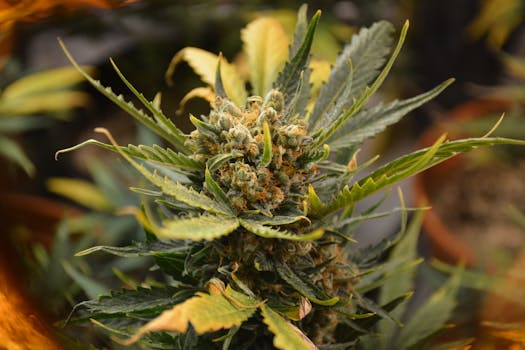
September is not your friend if you grow cannabis outdoors in the UK. The real threat is not cold nights or shortening days , it is a microscopic fungus that can turn a prize cola into brown mush in less than 72 hours. Botrytis cinerea, grey mould, kills more British outdoor crops than any other single cause. Most growers spot it far too late, usually when whole buds are already collapsing, because the earliest signs hide deep inside the canopy where eyes rarely go. The difference between catching it at hour 12 and catching it at hour 72 is often the difference between a partial harvest and a total loss. This guide gives you a week-by-week risk calendar, a named detection protocol, and the exact interventions that work in a wet British September , before the damage becomes irreversible.
Botrytis cinerea activates rapidly at 15 to 20 °C with relative humidity above 70 % , conditions that describe the average British September night almost exactly, according to Met Office UK climate averages. Infected tissue goes from a single grey spore cluster to a fully rotted cola in 48 to 96 hours. Catch it before visible sporulation begins and you can remove infected material and save the plant. Miss that window and the entire bud site is lost, with airborne spores already inoculating neighbouring sites.
- ✓ UK outdoor growers entering September flower
- ✓ Anyone who has lost a crop to bud rot before
- ✓ Growers in Wales, northern England, Scotland or any high-rainfall region
- ✓ First-timers who want to understand the warning signs
- ✓ Growers using dense or tight-budding genetics
- ✗ Indoor growers running sealed grow tents with humidity control below 55 % RH
- ✗ Growers who have already harvested before mid-September
- ✗ Those seeking a chemical-only spray solution (that does not exist)
What is Botrytis cinerea and why does September trigger it?
Botrytis cinerea is a necrotrophic fungal pathogen , it kills plant tissue in order to feed on it. Unlike powdery mildew, which stays on the surface, botrytis colonises the interior of dense plant structures first, which is exactly why it is so dangerous on cannabis buds.
The fungus produces airborne conidia (spores) year-round in UK soils and on decaying plant matter. What makes September lethal is the convergence of three conditions at once: daytime temperatures dropping into the 15 to 20 °C sweet spot for fungal growth, overnight relative humidity regularly breaching 70 to 85 %, and dense flower structures that trap moisture and restrict airflow. Published research in the Journal of Cannabis Research notes that botrytis is consistently the primary disease threat to late-season outdoor cannabis in temperate climates.
Most UK photoperiod strains are in peak flower during weeks 3 and 4 of September , their buds are at maximum density and their resin structure creates microscopic humid pockets. That timing is the worst possible intersection with British autumn weather patterns.
September is the highest-risk month for UK outdoor growers precisely because the fungus's ideal growth conditions align perfectly with peak bud density. Understanding this isn't just academic , it determines how often you inspect, how aggressively you defoliate, and whether you have a contingency plan for early harvest.
What are the earliest visual signs of botrytis on cannabis?
The very first sign is not grey mould , that is a late-stage indicator. Early botrytis shows up as a subtle discolouration of a single sugar leaf or inner bract, often a watery, pale green or slightly purplish bruised-looking patch about the size of a fingernail.
Within 12 to 24 hours of that initial patch, the affected tissue will feel slightly softer than surrounding material when pressed gently between gloved fingers. The classic grey-white fluffy sporulation that most people associate with grey mould only appears after the fungus has already colonised a significant volume of tissue , typically 24 to 48 hours after first visible discolouration.
The checklist below is what you are actually looking for during early detection:
- A single wilted or unusually pale sugar leaf emerging from the centre of a cola
- Soft, water-soaked texture on inner bract tissue (check by parting the bud gently)
- Any brown discolouration at the base of a bud site where it meets the main stem
- Tiny white or grey threads (mycelium) visible when you part the outer calyx layer
- A faint musty or "wet hay" smell distinct from normal resin aroma
- Dead or dying pistils in a cluster that are turning brown too early and too fast
The single most commonly missed sign, based on patterns reported across UK grower forums, is the wilted interior sugar leaf. Growers check the outside of buds and see nothing. The infection is already 18 to 24 hours old by the time that leaf collapses.
Train yourself to part buds during inspection , do not just scan the surface. A single wilted sugar leaf inside a cola is the 12-hour early warning. Act on that signal and you save the plant. Wait for visible grey fuzz and you have likely already lost that bud site.
The September Risk Calendar: week-by-week breakdown
Risk is not constant across the month. Understanding the progression lets you scale your inspection intensity and interventions to where they are actually needed.
Low, Moderate
Buds bulking. Daytime temps still 16, 19 °C. Check every 48 hrs.
Moderate
Night RH rising. First rain events likely. Daily inspection essential.
High
Peak bud density + autumn dew + cool nights. Inspect morning and evening.
Very High
Any lingering strain risks total loss. Emergency harvest decisions likely.
For northern England, Wales, and Scotland, compress this calendar by one full week , the risk profile of week 2 in the south becomes week 1 in Leeds, Manchester or Edinburgh, based on Met Office regional climate summaries showing earlier autumn humidity onset in northern regions.
If your strain is not going to be harvest-ready by September 21 in Scotland or September 28 in the South, you are rolling the dice. Any dense, mould-susceptible variety still on the plant in the final week of September in the UK north is at very high risk of total botrytis loss.
The 3-Point Daily Detection Protocol
Catching botrytis early requires a structured routine, not a casual glance. The following framework is designed to be completed in under 10 minutes per plant per day during high-risk windows.
A structured morning inspection routine for UK outdoor growers during the September high-risk window. Run it every day from September 8 onward.
Point 1 , The Stem Check: Inspect every main bud site where the cola meets the main stem. Part the outer calyxes and look for brown, softened tissue at the base. This is the highest-probability infection site on any dense strain.
Point 2 , The Interior Sugar Leaf Check: Pull two or three sugar leaves from inside each major cola. If any come out easily and look pale, yellowed, or water-soaked , not from nutrient deficiency , botrytis has begun. Leaves from healthy tissue require a firm tug.
Point 3 , The Smell Test: Cup the plant canopy with both hands, then take a slow breath at canopy level. Healthy plants smell sharp, resinous, terpene-forward. Infected plants carry a faint musty, wet-straw undertone beneath the resin smell. Trust this signal , it arrives before visible symptoms in many cases.
Formula: (Point 1 pass + Point 2 pass + Point 3 pass) = proceed. Any single fail = immediate removal of affected material + 48-hour follow-up inspection across all adjacent bud sites.
The smell test sounds imprecise but it is the fastest single-point screen available. Growers who rely only on visual checks miss the 12-to-18-hour early window consistently. The olfactory signal arrives first. Use it.
Botrytis risk by UK region
The UK's north-south gradient is stark when it comes to autumn moisture. Here are region-specific notes for growers making inspection and harvest-timing decisions:
South West England (Devon, Cornwall, Somerset)
Warmest and longest season, but exceptionally high Atlantic rainfall. October first-frost median is early-to-mid November, giving a long window , but September rain events are frequent. Risk window: moderate from September 8, high from September 20. Prioritise airflow and canopy thinning over cold protection here.
South East England (Kent, Sussex, Surrey)
Drier than the South West, typically the safest UK outdoor region. First frost often late October to early November. September risk window: low to moderate for most of the month, rising to moderate-high in the final week. Dense genetics in a wet spell remain vulnerable even here.
Midlands (West and East)
First frost arrives typically mid-to-late October across most of the Midlands. September humidity builds from week 2. Risk window: moderate from September 10, high from September 17. Strains needing October to finish face very significant botrytis pressure.
Wales and North West England
Some of the highest rainfall totals in the UK. Per Met Office regional data, parts of Wales average over 1,400 mm annually. Risk window: moderate from September 5, high from September 12. Any strain that hasn't cleared peak flower by September 20 is in severe danger. Fast-flowering seeds are the practical answer for these regions.
Scotland and Northern England
First frost can arrive as early as late September in upland Scotland. Risk window: moderate from September 1, high from September 8, very high from September 15. Only the fastest-finishing autoflowering seeds are a reliable bet for outdoor growing in these regions.
If you are north of Birmingham, every day a photoperiod plant stays on the plant after September 15 is a gamble. The mould pressure in Wales, northern England, and Scotland during late September is severe enough that a planned early harvest of 90% mature buds consistently beats a full-term harvest attempt with botrytis risk.
What to do when you find botrytis: step-by-step
Speed and containment are everything. Follow these steps exactly , the order matters.
Step 1: Do not disturb the infected site first
Moving or squeezing infected material first releases millions of spores into the air. Put on gloves and have a sealable bag ready before you touch anything. Approach the infected cola without brushing it against other bud sites.
Step 2: Cut below the infection margin
Using clean, isopropyl-sterilised scissors, cut the affected cola at least 5 cm below the lowest visible discolouration. Botrytis travels into the interior of stems faster than surface signs show. Cutting at the visible boundary often leaves infected tissue behind.
Step 3: Seal and remove immediately
Place the cut material directly into the sealable bag without letting it touch any other plant part. Seal it. Remove it from the garden entirely , do not compost it. Botrytis spores remain viable in soil and decomposing plant matter for the rest of the season.
Step 4: Improve airflow at the cut site
Remove the two or three nearest large fan leaves around the cut site to open airflow to the wound and neighbouring bud sites. A foliar application of potassium bicarbonate solution (5 g per litre) to surrounding sites can raise local pH and create a hostile environment for spore germination. Apply in early morning so the canopy dries before nightfall.
Step 5: Re-inspect every 24 hours for the next week
A single removal does not guarantee containment. Spores have already dispersed from the original site to adjacent buds. Run the 3-Point Detection Protocol daily across the entire plant and any neighbours within 1 metre for the following 7 days minimum.
The most common error after finding botrytis is declaring the problem solved after one removal. Plan for secondary infections within 48 to 72 hours of the first find. If you are finding new sites every day for three consecutive days, move to an emergency harvest of all mature colas rather than continuing site-by-site removal.
Which strains are most vulnerable to September botrytis?
Strain structure and genetics matter enormously. The table below ranks key risk factors.
| Risk Factor | High Risk | Low Risk |
|---|---|---|
| Bud density | Dense, tight, golf-ball calyxes | Airy, open sativa-style structure |
| Finish time | Late-finishing (Oct or beyond) | Fast-finishing (Sept or earlier) |
| Mould resistance | No known resistance in lineage | Bred with mould-resistance traits |
| Canopy type | Tall, bushy, dense canopy | Open, well-spaced branching |
| Genetics background | Heavy indica kush types | Ruderalis-dominant autoflower or sativa |
Dense indica genetics with tight bud structure produce the largest interior moisture pockets. Growers running those varieties in the UK should prioritise aggressive canopy management, including lollipopping and defoliation of inner bud sites, from early August to reduce the surface area available to botrytis in September. For high-risk regions, choosing from our best strains for outdoor growing , specifically varieties with documented mould resistance , is the most effective structural fix available before the season even starts.
Genetics selection is the single highest-leverage decision for botrytis prevention. Choosing the wrong strain for your region is harder to fix than any spray or defoliation regime. Mould-resistant, fast-finishing genetics beat intervention strategies every time in a wet British September.
Common mistakes growers make with botrytis
Mistake 1: Inspecting only the outside of buds
The outer face of a cola can look perfect while the interior is already colonised. Botrytis always starts inside dense flower structures because that is where humidity is trapped. Inspecting without physically parting buds misses the early window entirely.
Mistake 2: Watering late in the day during September
Any water applied to leaves or buds in the evening will not evaporate before overnight dew arrives. This stacks two sources of surface moisture directly into the highest-risk hours of the day. Water at first light , plants dry during the morning hours before humidity peaks again at night.
Mistake 3: Cutting at the visible infection boundary
As covered in the intervention steps, botrytis penetrates stems faster than surface symptoms indicate. Growers who cut exactly where brown tissue starts routinely leave infected material behind and see re-emergence within 48 hours. Always cut 5 cm below the visible margin.
Mistake 4: Leaving infected material in the garden
Dropping cut infected colas at the base of the plant or composting them on site releases spores directly back into the garden. Remove infected material in a sealed bag every time, immediately.
Mistake 5: Relying on foliar sprays as the primary defence
Potassium bicarbonate and copper-based sprays can slow surface spore germination but cannot penetrate dense bud interiors where botrytis is already active. Sprays are a supplementary tool, not a replacement for detection, removal, and airflow management.
Mistake 6: Dismissing a single infected site as isolated
By the time you can see or smell botrytis on one cola, airborne spores from that site have already landed on adjacent sites. Treat every first find as evidence of a garden-wide spore event, not a single localised problem. Expand your inspection radius immediately.
What happens if you choose wrong: two harvest scenarios
- Strain: Fast-finishing outdoor hybrid, 60-day flower
- Harvest date: September 18
- Buffer before risk peak: 7 days clear of Sept 15, 21 high window
- Risk level: Low
- Outcome: 90, 95% trichome maturity. Full yield. Clean, botrytis-free harvest. Slight reduction in final potency vs. waiting 7 more days , easily offset by having an intact crop.
- Strain: Dense indica, 70-day flower
- Target harvest date: September 28
- Buffer: Zero , squarely in Sept 22, 30 very-high-risk window
- Risk level: Very High
- Outcome: Three days of rain September 23, 25. Botrytis found on 4 of 6 main colas September 25. Effective yield reduced by 55, 65% after removal. Remaining buds compromised by spore exposure and hurried harvest.
Bottom line: The decision to wait 10 extra days for full maturity in a dense, late-finishing strain during a wet September is, in northern and central UK at least, frequently the decision that costs the entire harvest. A slightly early clean harvest beats a full-term rotted harvest every time.
If you are planning next season's outdoor grow, use our strain finder to filter by outdoor suitability and mould resistance before selecting genetics. It is the most useful pre-season decision you can make.
A 90%-mature harvest on September 18 is worth more than a 100%-mature harvest attempt on September 28 in any region of the UK north of London. Every day past September 20 in high-rainfall regions is not a day closer to peak potency , it is a day of compounding botrytis risk on a crop you have already spent months growing.
Planning next season's outdoor grow?
Browse genetics specifically selected for UK outdoor conditions , fast-finishing, mould-resistant varieties that clear September comfortably.
Browse Outdoor StrainsFrequently Asked Questions
What does early botrytis look like on cannabis buds?
What temperature and humidity does botrytis need to grow?
How fast does botrytis spread on cannabis?
Can I save a bud affected by botrytis?
Why did my September buds get botrytis even under a rain cover?
What month should I start an outdoor autoflower to avoid September botrytis risk?
Can I use hydrogen peroxide or baking soda to treat botrytis?
Does more airflow actually prevent botrytis?
My outdoor plant smells musty but I can't see any grey mould , what's happening?
Should I harvest early if heavy rain is forecast for a week in September?
Why does botrytis always seem to hit the biggest colas first?
How many times can I inspect per day without stressing the plant?
Compare strains side by side before next season
Use our strain comparison tool to evaluate mould resistance, finish time, and outdoor suitability across the full catalogue.
Compare StrainsSources
Ready to Start Growing?
Browse over 1,200 premium cannabis seeds with discreet shipping to all the United Kingdom and our 95% germination guarantee.
Shop Cannabis Seeds