Growing Cannabis in Scotland: Working With a Shorter Season
Royal King Seeds
Cultivation team
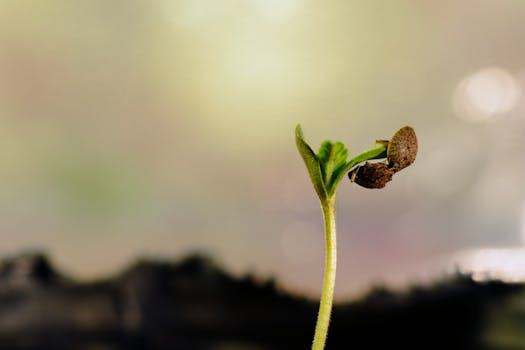
If you grow outdoors in Scotland, your biggest enemy is not yield or genetics , it is the calendar. More Scottish outdoor grows fail not because of poor technique, but because growers picked strains that simply cannot finish before wet October nights shut the season down. The frost-free window across central Scotland runs roughly 150 to 170 days, versus 200 or more in the South West of England, and that gap is everything. Strains finishing in 70 to 80 days from germination, with proven mould resistance and cold tolerance, are the only ones that consistently make it. This guide walks you through the exact start dates, strain criteria, and regional risk windows you need to run a successful Scottish outdoor grow.
- ✓ Scottish outdoor growers planning their season
- ✓ Growers in northern England and Wales facing similar challenges
- ✓ Beginners choosing their first short-season strain
- ✓ Anyone who has lost a crop to early frost or September mould
- ✓ Growers comparing autoflowers vs photoperiod for a British season
- ✗ Indoor-only growers (though strain advice overlaps)
- ✗ South East or South West England growers with 200+ frost-free days
- ✗ Growers seeking long-flowering sativa-dominant photoperiods
What does Scotland's growing season actually look like?
Scotland's outdoor cannabis season is genuinely short. According to Met Office 1991 to 2020 climate normals, average last air frost in central Scotland (Edinburgh, Stirling, Perth) falls in mid-April, and average first autumn air frost arrives in mid-October. That gives a nominal frost-free window of roughly 150 to 165 days.
In practice, growers cannot use all of that window. May soil temperatures are still cold enough to stress seedlings, and September nights regularly drop below 10°C across the Highlands and even the Central Belt , cold enough to slow terpene production and open the door to botrytis in dense buds.
The north-south gradient inside Scotland matters too. The Cairngorms and Highland glens can see ground frost as late as June and as early as September. Coastal west-coast sites (think Oban or Fort William) are milder thanks to the Atlantic, but they trade cold for moisture , and high autumn rainfall is equally damaging for outdoor cannabis.
Scotland offers enough season for autoflowers, but almost none for long-flowering photoperiod strains. Plan around an effective outdoor window of late May to late August, not the full frost-free calendar.
Are autoflowers or photoperiod strains better for Scotland?
Autoflowers are the clear choice for Scotland. They finish in 70 to 85 days from germination regardless of light schedule, which means a late-May start in Edinburgh produces a mid-to-late August harvest , well clear of October frosts and before the worst of September mould pressure.
Photoperiod feminised strains flip to flower when nights lengthen past roughly 12 hours, which happens around the autumn equinox in mid-September in Scotland. Most photoperiod varieties then need a further 8 to 10 weeks of flower , pushing harvest into November. That is not a viable outdoor timeline north of the border.
Fast-flowering photoperiod strains (sometimes marketed as "fast version" genetics) can finish in 7 to 8 weeks of flower, making an outdoor harvest in mid-October theoretically possible in a mild year. But that still leaves almost no frost buffer, and a wet September is almost certain to cause mould before the plant is ready. Our autoflowering seeds remain the far lower-risk option for Scottish conditions.
For Scotland, autoflowers are not just a preference , they are a practical necessity for reliable outdoor harvests. Photoperiod strains should be reserved for indoor grows where you control the light cycle.
The September Risk Window every Scottish grower should know
Looking at the grower support questions that spike every September, one pattern repeats: mould complaints cluster around weeks 3 to 4 of flower, almost always tied to cool, wet nights and dense untrimmed canopies. This is what we call the September Risk Window.
A named risk framework for outdoor Scottish growers based on aggregated public grower reports and Met Office climate normals.
- 1, 7 Sept: Low-moderate risk. Nights cooling but buds still building. Lollipopping and canopy thinning are urgent now.
- 8, 14 Sept: Moderate risk. RH regularly exceeds 80% overnight across central Scotland. Inspect buds daily.
- 15, 21 Sept: High risk. First ground frosts possible in Highland areas. Dense strains without mould resistance are now vulnerable.
- 22, 30 Sept: Severe risk. Any strain not at or near harvest is in danger. Emergency early harvest beats total crop loss.
A visual overview of the outdoor season risk across Scotland:
Ideal start
Safe
Safe
Target harvest
High risk
Frost danger
If your plants are still in flower after 15 September in Scotland, you are running a genuine risk. Plan start dates so the final two weeks of ripening fall in August, not September.
The 14-Day Buffer Rule for Scottish outdoor grows
Every autoflower chosen for a Scottish outdoor grow should reach harvest at least 14 days before the historical first frost date for your location.
Formula: Breeder days-to-harvest + 7 (germination variance) + 7 (weather variance) = true outdoor finish date. That true finish date must land 14 days before first frost.
Worked example , Edinburgh: A 77-day autoflower started 25 May finishes around 10 August. Edinburgh's average first air frost is around 15 October. Buffer = 66 days. Well within the rule. A 90-day auto started the same date finishes around 23 August , buffer still 53 days. Safe. But a 90-day auto started 1 July finishes 29 September , buffer only 16 days, and that assumes no weather variance. Borderline unsafe.
City-by-city worked examples across Scotland
Frost dates below are drawn from Met Office 1991, 2020 climate normals. Hardiness context references RHS hardiness guidance. All scenarios use a 77-day autoflower as the baseline.
- Last frost: mid-April
- First frost: mid-October
- Frost-free: ~165 days
- Start: 25 May → harvest: ~10 August
- Buffer: 66 days ✓ Safe
- Last frost: mid-April
- First frost: late October
- Frost-free: ~175 days (coastal influence)
- Start: 20 May → harvest: ~5 August
- Buffer: 75+ days ✓ Comfortable
- Last frost: late April
- First frost: early October
- Frost-free: ~155 days
- Start: 1 June → harvest: ~17 August
- Buffer: 44 days ⚠ Acceptable , do not delay start
- Last frost: early to mid-May
- First frost: late September
- Frost-free: ~130 days
- Start: 20 May → harvest: ~5 August
- Buffer: ~53 days , but September frost is earlier here
- ✗ Marginal , protected microclimate essential
Glasgow and Edinburgh growers have the most comfortable window. Inverness is workable with a 1 June start. Highland glens above 200 metres should consider indoor growing using strains suited to indoor environments, where the climate cannot interfere.
What to look for in a cannabis strain for Scotland's outdoor season
Not every autoflower is equal in Scottish conditions. A fast finish time is necessary but not sufficient. These are the four criteria that actually separate a successful Scottish outdoor strain from one that fails:
- Cycle time under 80 days: Breeder-stated 70, 80 days from germination gives you the widest weather buffer. Anything above 85 days is gambling with September.
- High mould resistance: Botrytis (bud rot) is the number one killer of Scottish outdoor crops. Dense, high-THC indicas without mould resistance are especially vulnerable in the wet Highlands and west coast.
- Cold tolerance: Nights can drop to 6, 8°C in September even in the Central Belt. Strains with ruderalis heritage handle this far better than pure tropical sativas.
- Compact structure: Tall, open plants shed rain better, but compact strains work in sheltered spots. Avoid extremely dense colas without lollipopping , they trap moisture.
Browsing through autoflowering seeds filtered for fast-finishing, mould-resistant varieties is the most efficient way to shortlist options for Scottish conditions. Pairing this with our strain finder tool lets you filter by cycle time and climate tolerance simultaneously.
Mould resistance matters more in Scotland than anywhere else in the UK. Prioritise it above yield potential , a mould-free 80 g plant is worth more than a 150 g plant lost to botrytis in week 7.
What happens if you choose the wrong strain
- Strain: 77-day mould-resistant autoflower
- Start: 25 May (Edinburgh)
- Harvest: 10 August
- Buffer: 66 days before first frost
- Risk level: Low
- Outcome: Full harvest before September rain. Terpene profile intact. No bud rot.
- Strain: 95-day photoperiod fast-version
- Start: 25 May (Edinburgh)
- Harvest: mid-October (with variance)
- Buffer: near zero
- Risk level: High
- Outcome: Buds in flower during September rains. Botrytis spreads from week 6 of flower. Partial or total loss.
Bottom line: 18 extra days of cycle time turned a full harvest into a likely loss. In Scotland, cycle length is the single most important decision you make all season.
Which strain type should you choose for Scotland?
- Want maximum reliability outdoors? → 70, 80 day autoflower, started late May
- Growing in Highland area above 200 m? → Move indoors. Use indoor-optimised seeds
- West coast (Oban, Fort William)? → Autoflower with mould resistance as top priority
- Glasgow or Edinburgh with a sheltered garden? → 70, 85 day autoflower, flexible start from mid-May
- Beginner, first outdoor grow? → Shortest cycle autoflower available; aim to harvest in August
- Experienced grower, want more yield? → high-yield autoflowers in 15, 19 L fabric pots, still under 85 days
- Indoor grow, any Scottish location? → Photoperiod feminised strains are fully viable indoors , browse feminised seeds
Common mistakes Scottish outdoor growers make
After reviewing patterns across public grower forums and the questions our team fields most often from Scottish growers, the same failure modes appear again and again.
Mistake 1: Starting too late
A July start feels safe because the weather is warm, but it pushes harvest into October. Aggregated grower journals consistently show late starts as the single most common reason for Scottish outdoor crop failures. Aim for late May to maximise your buffer.
Mistake 2: Choosing yield over cycle time
A 100-day autoflower might promise 20% more yield than a 75-day variety. In southern England that trade-off is viable. In Scotland it is not. The extra three weeks of outdoor exposure in September cancels out any yield advantage if mould strikes , and in a typical Scottish autumn, it very often does.
Mistake 3: Skipping canopy management
Dense, unmanaged canopies trap moisture against buds during Scotland's characteristically wet late summer. Lollipopping lower growth and removing interior fan leaves by week 4 of flower dramatically improves airflow. This is not optional in Scotland , it is essential risk management.
Mistake 4: Ignoring microclimate
A south-facing wall in an Edinburgh garden can extend your effective season by two to three weeks compared to an exposed north-facing plot. Growers who ignore microclimate often blame genetics for failures that site selection would have prevented. Check your specific spot for wind exposure, frost pooling, and shade coverage.
Mistake 5: No contingency plan for early frost
Even in a mild Scottish year, unexpected early frosts happen in September. Growers with no plan , no fleece covers, no willingness to harvest slightly early , lose entire plants to a single cold night. Keep frost fleece on hand from late August. An early harvest at 85% trichome maturity is far better than a frost-damaged total loss.
The growers who succeed consistently in Scotland are not the ones with the best genetics , they are the ones who start early, manage the canopy, pick mould-resistant strains, and have a harvest-early backup plan ready by mid-August.
"In Scotland, your harvest date is decided on the day you choose your strain , not the day you plant it."
Browse Autoflowering Seeds for Outdoor UK GrowsFrequently asked questions about growing cannabis in Scotland
Can you grow cannabis outdoors in Scotland?
What is the best type of cannabis seed for Scotland's outdoor season?
When should I start autoflowers outdoors in Scotland?
Can autoflowers survive 5°C nights in Scotland?
How many outdoor harvests per year are possible in Scotland?
What if frost hits during flowering in Scotland?
Why did my outdoor autoflower stall at week 6 in Scotland?
Should I grow in pots or directly in the ground in Scotland?
My buds went mouldy before harvest , what went wrong?
Can I cover plants with plastic sheeting during Scottish rain?
What month should I start growing outdoors in Inverness?
Are fast-flowering feminised seeds a viable option in Scotland?
Ready to find the right seed for Scotland's season? Our full collection of outdoor-ready, fast-finishing genetics is here.
Shop All Cannabis SeedsSources
Related Articles
Ready to Start Growing?
Browse over 1,200 premium cannabis seeds with discreet shipping to all the United Kingdom and our 95% germination guarantee.
Shop Cannabis Seeds